Idle Rumors Add to Well-Founded Apprehensions

Employee perceptions are powerfully shaped by the question:

“What do work place interactions, both those directly affecting me and the observed interactions of others, mean to my circumstances?”

Leaders must understand questions like this and how employee thinking works overall. This understanding is critical for leaders because it is a:

  • Source of individual actions and team performance,
  • Important determinate of output and organizational performance
  • Vital part of organizational culture.

Employee thinking is actually what creates the “attitudes” part of my definition of organizational culture. This in turn helps to form habits and practices and ultimately determine organizational performance. Thinking drives perceptions (both good and bad), which inextricably connect subordinates to their leaders and enterprise.

Human beings are always thinking. Our minds are constantly at work: observing, orienting, deciding, and acting, then starting the process all over again.  Employees probably spend a quarter of their lives at, or involved with work.  Next to friends and family, it is the part of their lives that occupies them most, an area to which they devote considerable thought and attention. Leaders need to understand that:

“Observing, Orienting, and Deciding” are critical employee behaviors and ones that employers need to support.  Because they drive acting, work and production.

“Acting” is the employees’ value propositions for the employer, the production component of the work place, the individual and collective production element of organizational performance that all employees contribute.

“Orienting, Deciding, Production, Work, Acting” are driven by what is observed from personal and second hand interactions and the “rumor mill”.

In my last post I described how employees internalize both personal and second hand interactions.  A third and lesser-understood internalization is what employees do in the absence of credible information, aka the “rumor mill”.  In a vacuum of feedback and communications from their leaders; they simply “fill in the gaps” with their imaginations, usually fueled by rumors, incorrect suppositions, and visualizations (generally free of fact and context).  Of the three kinds of interactions; (1) personal, (2) second hand observation, and (3) assumed/imagined/supposed-the last one is the least reliable. It is the least likely to have facts, context, and substance. It is also the one that occupies significant employee time and attention because the mind is always at work.

Like the analyses that the employees applies to personal and second hand encounters, they also conduct a very personal and unconscious analysis of assumed/imagined/supposed matters/events and what it means to them:

“Is it good for me?  Bad for me?  What happens to me next?  Why?  How?  When?  What’s the benefit for me? What are the downsides for me?”

This is the orienting part of the process; “What does it mean to me?” From this comes deciding and acting, the output of business and organizational performance.

A powerful example of the power of rumors, their destructive forces, and how to prevent them comes from the military justice system.  In the Armed Forces minor offenses are heard, adjudged and punished in a process called an “Article 15 proceeding” by the Commanding Officers of the organization.  When a member of the unit first runs afoul of regulation the inevitable rumors start among the peers of the person involved.  These usually inflate the nature of the alleged offense from its actual seriousness, imagining the worst, spreading and conflating; causing real damage to the reputation of an individual who has not yet been officially heard by the leadership.  Added to this are conjectures as to the supposed miscreant’s ultimate fate and likelihood of eternal condemnation and outright damnation by the Commander. As a commander, I knew these dynamics well and swiftly resolved the case with maximum transparency, even making the Article 15 hearing public to members of the squadron.  They could see for themselves what the facts were and how the commander (me) heard, considered, and judged the facts and law.  I knew that most imagined themselves in front of their commander and were asking themselves if the process was fair from their own perspective.  I made sure it was.  Fast, fair, and based on the law and facts so that everyone understood reality; not rumors.

For leaders, the lesson is the vital importance of constant, effective communication with the work force at all levels. The communication must be precise, credible, and on terms that relate to the many audiences in an organization.  Later on, we’ll talk about how to do that.

In my next post I’ll talk about employee expectations of leaders; most leaders have no idea how high they really are.

I ask my readers to share their thoughts, concerns and observations.

Many thanks, Keith Stalder, #11

Copyright © 2014 Keith Stalder & Associates, LLC.  All rights reserved.

Subordinate Attitudes; the Wellspring of Organizational Performance

Subordinates relentlessly seek to optimize their circumstances. This is not in any way a criticism; rather, it is simply human nature. It’s an incessant quest to:

  • Optimize their own circumstances;
  • Monitor and tend self-interests;
  • Acutely tune to desired outcomes; and
  • Focus on the best paths to those achievements.

Leaders must thoroughly understand this elemental aspect of employee motivation and how subordinates acquire, assimilate, and analyze organizational interactions.

Organizational interactions create the perceptions and attitudes of employees that define individual and team behaviors and ultimately organizational performance. 

Where do employee perceptions and attitudes come from? They are created from every personal and observed interaction with and between leaders and the organizational processes.  Subordinates, sometimes subconsciously and other times deliberately, are focused like a laser on what their leaders do, how they do it, what it means, what they might do next, and more.  Every time employees interact with leaders or institutional processes, a very personal analysis is conducted of what it means to them: “Is it good for me?  Bad for me?  What happens to me next?  Why?  How?  When?  What’s the benefit for me? What are the downsides for me?”

Subordinates do this not only for those interactions that affect or involve them directly, but for every observed interaction involving everyone else between leaders and/or the organization and its processes.  Even if it doesn’t directly relate to them, they instinctively project themselves into those interactions and apply the same judgments, analyses, and conclusions as I described above.  “Would that be good for me?  Bad for me?  What would happen to me next?  Why?  How?  When?  What would be the benefit for me? What would be the downsides for me?”

Observed interactions, like personal interactions, become part of employee perceptions, attitudes and behaviors.  Human nature very strongly tells employees; “If they (the leaders and/or organization an its processes) will do that to/for/with a third party, they will do likewise to/for/with me”.  Every interaction, those that directly affect followers, or by observation of the circumstances of those around them, is assimilated and analyzed to reach a conclusion about its personal effect.

Leader and organizational interactions with employees/subordinates can be positive, neutral, or negative, and will have an identical corresponding effect on employee attitudes and perceptions about everything in the organization.  Those attitudes and perceptions in turn affect every aspect of subordinate behavior and individual performance.   Attitudes and perceptions formed through interactions drive what employees think and do, how it is done, how well it is performed, and all the things that produce the output of organizations.  It directly shapes individual and collective performance.

That’s why it’s critical to understand how employee thinking works; it is the well-spring of individual and team actions and performance, a key determinate of output and organizational performance, a vital part of organizational culture.  It’s the “attitudes” part of my definition of organizational culture that helps to form habits and practices, and ultimately organizational performance.

The lenses of self-interest powerfully shape all that employees think, say, and do; they inextricably connect subordinates to leader and enterprise actions and are the very DNA of organizational performance.

In my next post I’ll tell you about another equally powerful lens that is at always at work; how followers process shortfalls in leader and organizational information and feedback.

I ask my readers to share their thoughts, concerns and observations.

Many thanks, Keith Stalder, #10

Copyright © 2014 Keith Stalder & Associates, LLC.  All rights reserved.

What People Need from Leaders and Organizations

All of us need certain things from our working lives and the organizations in which we spend so much of our time.  Work is very important.  We spend years of our lives in our chosen work and it probably represents the greatest allocation of our total life span devoted to a single activity.  Work sustains us and our families and makes possible the future success of succeeding generations.  Our work should be a way for us to achieve a higher purpose in our lives, to create and excel, to challenge ourselves, to attain the apex of our chosen fields, to contribute to a greater good, to be recognized for all that we do, to feel good about ourselves and our work. In Maslow’s original hierarchy of needs, he used a five stage model divided into basic (or deficiency) needs (e.g. physiological, safety, love, and esteem) and growth needs (self-actualization).  He said that one must satisfy lower level basic needs before progressing on to meet higher level growth needs.   Once these needs have been reasonably satisfied, one may be able to reach the highest level called self-actualization.

maslow's hierarchy of needs five stage pyramide

Without embroiling the discussion in the details of Maslow’s work or subsequent thinking in this area, I submit that in our work places, careers, vocations, and employment, all of us want and need everything on the pyramid at the same time, and we want it all NOW.  As people we are not satisfied with “good enough” for ourselves.  We are constantly recognizing and striving for what’s better in our lives and work.  From our work we want and need everything on Maslow’s pyramid; self actualization, self esteem, belonging, safety, and physiological requirements.  These are necessities in our working lives if we are to live the lives we want.  And we make little or no distinction between the levels in our work; we want it all NOW and getting it, or at least enough of each, is what motivates us to do better and fulfill our lives in meaningful ways.  If we can do that, we will thrive in our professional lives and the effects on our performance will be remarkable, as will the effects on the organizations in which we work.

But what does the pyramid mean in practical terms in our working lives?  What do we really want?

Many think of compensation at, or near, the top of our job satisfaction pyramid. However, in my experience compensation tends to be what I call a “dissatisfier”, in that it’s not usually a strong motivational element. But if not well managed can be the source of friction and discontent. Of course we must be compensated enough to provide safety and physiological needs.  But once met, these needs quickly pass into the “background” of our daily lives.  We don’t think much about them, unless they are taken away, increased/decreased, or changed in some way.  They must be fair and adequate and are a cost of admitting talented people to the workplace.  So, if compensated in a fair and adequate way, what really matters to us in the workplace? Here’s a list of basic needs I’ve observed throughout my career:

We want our leaders and colleagues to genuinely care about us, as employees and people.

We want to contribute to the mission and organization, and be seen to do so.

We want to create and grow as we contribute; we want that creativity to be absorbed and productively used by the organization.

We want to do the best work possible, to make us proud of ourselves and our products.

We want to be thanked.

We want our leaders to talk to and listen to us, to hear what we know and the things that we are trying to do to help.

We want to know what is going on in the organization, what our leaders are thinking, what they plan to do, how it affects us, the why of everything, and we want to know it in real time.

We want our leaders to spend time with us.

We want the organization and its leaders to help us do our jobs better.

We want empathy for our views and circumstances.

We want to use our time productively, doing things that help the organization.

We want to know where the organization and we are going, what are we accomplishing, for whom, why, in order to…..

We want to be recognized and praised.

We want good guidance.

We want to be held accountable.

We want to lead.

We want honest errors to be corrected and tolerated.

We want the support of leaders when we need it, personally and professionally.  We want loyalty.

Looking at this list, it’s mostly all about us as employees, but that’s good.  Great managers and leaders recognize this dynamic and create a professional environment to satisfy employee’s basic needs. Just as in Maslow’s hierarchy, once these basic needs are met, people will be able to achieve professional self-actualization. When these conditions are met, our organizations truly excel.

In my next posts, I’ll talk about each of the things we want and need.

I ask my readers to share their thoughts, concerns and observations.

Many thanks, Keith Stalder, #8

Copyright © 2013 Keith Stalder & Associates, LLC.  All rights reserved.

People Are The Life Blood of Every Organization

I have long believed that the most important ingredient in achieving the most challenging things in every organization is its people.  That they are the very foundation on which everything rests, from which we accomplish all that we need and want to do as leaders, managers, businesses, and organizations.  That if our people are successful, that leaders, businesses and organizations will certainly be successful as well.  If people thrive in their work experiences, have high morale, exercise their creativity, and are allowed and helped to reach their full potential and aspirations that nearly anything is possible.  One of the fundamental requirements of effective managers and leaders is to enable, support, and ensure that those things happen.  For me, this defines the key role of leaders and managers in every organization and business, that of being responsible for the morale, effectiveness, and productivity of the indispensable factor of production/accomplishment for all organizations; our people.

But my experience tells me that these views are not universally held and many (most?) leaders, managers, and organizations don’t share that outlook.  Many corporate, business, and organizational cultures appear to regard their people as something to be managed only as much as needed to avoid friction and conflict, to be dealt with by HR departments, left in the dark on their futures and business plans, and marginalized in finding and contributing to solutions for organizational challenges.  The effects I see on organizational performance where these conditions prevail are not surprising; low effectiveness and efficiency, low morale, high turnover, mediocre performances, a work force that trudges through its day-to-day life with resignation and quiet desperation.  The best people leave, the less talented and motivated stay, a creeping mediocrity prevails, deepens and widens, as the cycle feeds on itself.  Most of us are operating at the low end of Maslow’s hierarchy of needs and “getting by”.  In our work lives where we spend with to twelve hours a day, five days a week, for most of our lives, it seems tragic that higher levels of achievement and fulfillments can’t be realized and the benefits of that be translated to organizational performance writ large.

Organizations can do it better, much, much better, and it’s not complex or imponderable.  It’s straight forward, but it requires an understanding of the elements that produce superior organizational performance, beginning with understanding people and helping them succeed, so the business or organization can succeed and thrive.  And it requires focus and work, over time.

In my next series of posts I’ll tell you what people want from leaders, each other, businesses and organizations; how we interact with these key elements of our working lives.  Most of it is provided by leaders and managers.

I ask my readers to share their thoughts, concerns and observations.  Please leave comments, they will be greatly appreciated.

Many thanks, Keith Stalder, #7

Copyright © 2013 Keith Stalder & Associates, LLC.  All rights reserved.

Cultures and Subcultures: Harmonization or Sub-optimization?

In my most recent blog entry, I provided a more concrete overview of “organizational culture” and explained difficulties in defining it. These difficulties arise from the fact that there is not a single definition of organizational culture. Rather, the term is commonly applied in several different academic disciplines to include: organizational behavior, management science, and communications. For my purpose, an organizational culture is defined as “the habits, attitudes, and practices” of the organization.

I also explained that defining organizational culture is the first step in being able to make changes to it. This is followed by developing an understanding of the factors that create culture, which in turn allows for the re-imagination or transformation of those factors, and thus the gradual transformation of culture.

However, as defining organizational culture is the first step in the process of changing culture, truly understanding it is pivotal. In this blog I will take more time to expand on and explain the definition of organizational culture.

Organizational culture is created over time through the repeated habits, routines and behaviors of members of the organization. Collectively, these daily interactions create both positive and negative effects on culture, ultimately impacting its performance. High performing organizations endeavor to create a common organizational culture, which acts as a catalyst to harmonize interactions between organizational elements toward a unity of effort in the execution of enterprise-wide performance. In the absence of a common organizational culture, individuals always classify themselves into subcultures based on multiple factors including occupational skill sets, geographic location, or even the uniqueness of a particular function. These subcultures may not always operate harmoniously (in fact, they usually don’t), often resulting in the optimization of subcultures at the expense of the greater organization. Actions or policies pursued to optimize subcultures can significantly inhibit collective unity of effort toward a common mission or broad organizational goals. For reference, see my very first post on “Beaver Dams”.

Increasing the effectiveness and efficiency of organizational performance requires the transformation of subcultures into a common, overarching organizational culture.

Since subcultures are created, they can also be transformed into a common organizational culture. This transformation begins with changing the fundamental habits, routines and behaviors within subcultures. This is not a difficult process. However, it takes commitment from executive leadership. Transforming culture begins with an in-depth understanding of the cultural dynamics, nuances and workings that create subcultures. Generally, leaders within organizations do not fully comprehend their cultural deficiencies, the root causes of those deficiencies nor their potential effects until adverse circumstances are already present. In fact, close proximity to the organization can create significant blind spots, biases and unintended misperceptions for leaders. On the other hand, however, a full understanding of culture enables leaders to effectively deal with dysfunctions and challenges when they appear. Understanding the root causes and effects of these interactions enables executive leadership to lay the foundation for the successful integration of subcultures to better achieve organizational priorities.

Understanding the cultures and subcultures of any organization is a time consuming endeavor for leadership. Further, inherent biases make it difficult to objectively examine your own organization. It is possible, but in my experience it is best to seek an objective observation from experts outside the organization. By working closely with an independent outside “eye”, it’s much easier to understand current culture and what creates it, with the ultimate goal of changing it for the better.

Drawing from my own experience, I have worked with very large organizations where I was able to perform a series of interviews with hundreds of employees at all levels of these organizations. Employees commonly cited subcultures as a major obstacle to performance. Specifically saying that subcultures were self-protective; valuing the equities of the office and/or duty assignment above a singular organizational culture and objectives.

They spoke consistently of a lack of leadership from the top, of the need for institutional discipline, and the need for a willingness of leaders to make difficult decisions and stick by them. They truly wanted to be led by their leaders. However, in the absence of the ability of senior leaders to impose and implement top-down direction many thought that the subcultures exercised virtual autonomy within their respective domains, hindering overall performance. They believed the only effective way to improve performance was to direct solutions that redistribute power and authority within the organization. It was commonly believed that senior leadership supported the concept of reform and improvement conceptually. However, this conceptual support was not translated to action. A common tactic to preserve subcultures was passive resistance to reform and a consensus-based approach to problem solving.

The example above serves to demonstrate that in absence of the proper authorities, where continuous focus by the most senior-level leaders is lacking and relentless follow-up over the years is non-existent, organizations will simply muddle along in the same old performance “rut.”

These factors, among many others, all comprise the cultures and subcultures that conspire to sub-optimize organizational performance. Unfortunately, there are far too many to detail and explain in one entry, but they will be addressed in due time.

As I said in my previous post, changing your culture is a simple three-step process. First, understand your culture and root causes of cultural issues. This is best accomplished with help from an independent, third-party to mitigate individually held biases. Second, change the activities around the root cause. Third, and most difficult, reinforce these changes day-after-day, year-after-year until it is ingrained into the habits, attitudes and behaviors of your organization.

Next entry, I’ll discuss “People;” the sine qua non (originally a Latinlegal term for “without which there is nothing”) of all organizations. People are the indispensable and essential ingredient to an organization. They are the foundation of everything an organization does. Unfortunately, in regards to people, most leaders are like parishioners at a house of worship; many attend, but few understand…

I ask my readers to share their thoughts, concerns and observations.  Please leave comments, they will be greatly appreciated.

Many thanks, Keith Stalder, #6

Copyright © 2013 Keith Stalder & Associates, LLC.  All rights reserved.

Defining and Understanding Organizational Culture to Change It

In my previous entry, I introduced the concept of organizational culture as the habits, attitudes, and practices that determine performance.  Given the importance of the relationship between organizational culture and performance, wherein performance is an output of culture, fostering the correct culture is crucial to the success of any organization. Simply put, high performing organizations have high performing cultures.  But this begs the question, how does one create a high performing culture? Answering this question first requires a genuine understanding of organizational culture and the elements which shape and define it.  Then, with this understanding, comes the possibility of creating a specific organizational culture or changing one already in place.  While this sounds like a basic enough formula, its success is predicated on having the correct definition and understanding of organizational culture.  That sounds easy, but given the variety of ways in which the term is often used, it can be more difficult than it seems.

The term “culture” is greatly overused in almost every context, and especially in the realm of business and organizational behavior.  We all have a vague notion of the definition.  However, our individual interpretations are applied to the term culture in such a way that limits our understanding and ability to use the concept in a meaningful way.

For example, take the wide spread use of the term “popular culture” or “pop culture.”  It is applied so broadly the word means almost everything that happens everywhere.  This is just one example of how the use of “culture” has been over-generalized and individualized.  Ultimately, this makes the term less than meaningful and almost impossible to apply uniformly.  The same is true when applying “culture” to business and organizational reform/transformation.

For leaders and students of management and organizations, this need not be the case.  In fact, if we are serious about making changes in organizational culture we really only need to do 3 fundamental things:

  1. Define it,
  2. Understand what creates it, and
  3. Appreciate how to change it.

1. Defining Culture: There is nothing abstract about culture.  The dictionary definition that applies here is: “shared beliefs and values of group: the beliefs, customs, practices, and social behavior of a particular nation or people.”  I prefer to simply say that it is the “habits, attitudes and practices” of any organization.  As I said in my last blog, culture directly determines performance.

2. Understanding What Creates Culture: How is culture created?  The things we do every single day; the accumulation and internalization of thousands of activities, thoughts, actions, habits, tendencies, and reactions create it.  Subtly, but powerfully, the convergence of these factors produce effects that form culture and determine how organizations perform.

There are 4 core elements of organizational culture that comprise the driving forces of all activities, thoughts, actions, habits, tendencies, and reactions.  They are:

  1. People,
  2. Leadership,
  3. Organization and Processes, and
  4. Industry-Specific Business Methods and Processes.

These elements all come together to create an organizational culture that is constantly evolving and refining in a dynamic fashion.  While these elements are not often seen as connecting, they do.  We can’t look at or isolate just one.  They all interact with each other and all create organizational culture, which can be “good” or “not so good.”

There are important sub-elements as well and I’ll talk about each in subsequent postings, but these are the “big four.”  They are the pillars that produce organizational culture.  Think of it them as pillars supporting the “roof” of business culture.

3. Changing Culture: How is culture changed if we don’t like it?  First, an understanding of the root causes of issues within our organizational culture must be developed.  Once they are understood, the activities around these root causes must be reimagined in better ways.  To permanently transform these reimagined activities into the habits, attitudes and practices, they must be reinforced day after day, year after year, until the activities, thoughts, actions, habits, tendencies, and reactions have been ingrained into the culture.  Like everything that matters in life, what matters most are the things we do every day, year in and year out.  It’s not a spectator activity. This is about making a difference by doing the right things, in the right ways, for the right reasons.

In my next blog, I’ll expand on defining culture and why this is the critical first step in organizational change.

I ask my readers to share their thoughts, concerns and observations.  Please leave comments, they will be greatly appreciated.

Many thanks, Keith Stalder, #5

Copyright © 2013 Keith Stalder & Associates, LLC.  All rights reserved.
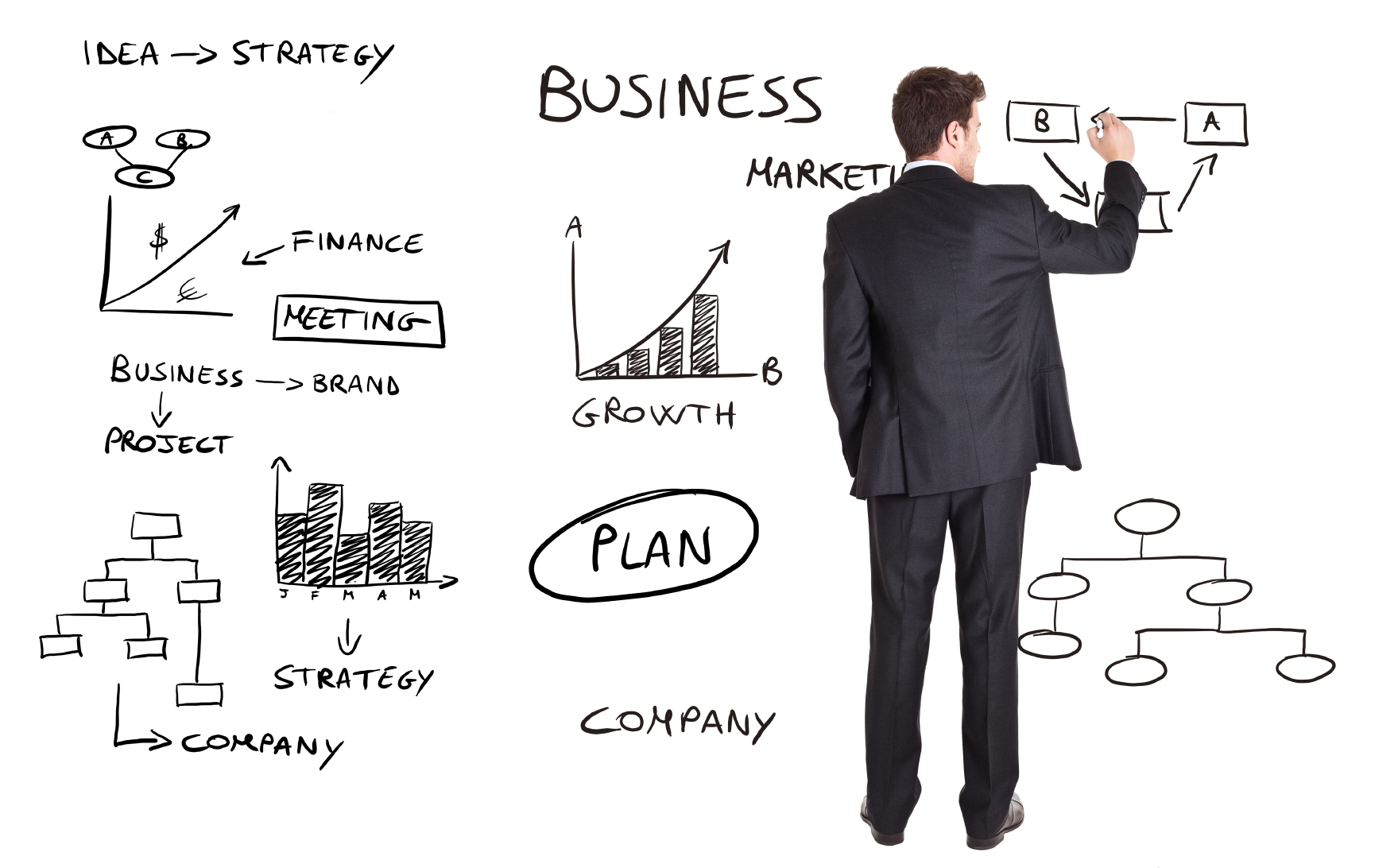
Business Integration; A Powerful System For Aligning People, Leadership, and Processes

In my last entry, I told you that organizational dynamics and improvement are like dieting; we lose weight by eating less (and better) and burning more calories through activity and exercise.  At the top level, it’s that simple.  Eat less and exercise more.  But we know that’s not easy to accomplish.  It takes dedication, discipline, an understanding of the details of nutrition and exercise, a constant attention to our health and well-being, proper rest, emotional health, and abstinence from harmful practices and food and drink.  Likewise, there are no quick fixes, no easy ways out, no effortless solutions, and no magic bullets to business management and leadership reform challenges.  It takes understanding, a lifetime of dedication, and system that works for each of us to be successful.  It’s a long-term lifestyle, not a quick fix.

So where do we start?  First let’s start with the basic building blocks of brilliant businesses and organizations:

  • People
  • Leadership
  • Organization and Processes
  • Industry-Specific Business Methods and Processes

All of these acting together create an organizational culture; the habits, attitudes, and practices that determine performance.  They are the large pillars or elements of our brilliant business lifestyle, each with many components, techniques, and methods.  None of it is complex; all are easy to do. However, like our healthy lifestyle, it takes dedication, discipline, an understanding of the details, constant attention, abstinence from harmful practices, and hundreds of small and large contributors PRACTICED OVER A LIFETIME.

Think of people, leadership, organization and processes and industry specific practices as the things that create an organizational culture.

Taken together, these things define, determine, and comprise the culture of every organization; its habits, attitudes, and practices.  Everything that matters about every organization is embodied in its culture, and the output of culture is performance.  A highly motivated or inspired culture results in above average or superior performance.  Apathetic or indifferent culture likewise guarantees substandard performance.   Culture creates performance for all organizations, be it a business, university, government agency, military unit, you name it.  The habits, attitudes, and practices are direct determinants of performance.  High performing organizations have high performing cultures.  Their people, leadership, organization and processes, and industry-specific practices are highly developed and well executed.

This blog is a formula for understanding the things that matter most about people, leadership, organization and processes, and industry specific practices. Then putting the knowledge into practice to align the four pillars and produce highly functioning, superior performing organizations.  It’s a formula for business integration; a powerful system for aligning people, leadership, and processes.  It’s enduring, even timeless, and immune to the fads, trends, and fashions of the day.  It’s about being brilliant at the basics and changing the things that make organizations dysfunctional and suboptimal performers.  It embraces innovation and integrates the specific practices of every industry, organization and business to produce the optimum culture that creates sustained superior performance, year in and year out.  It requires dedication, discipline, an understanding of the details, constant attention, abstinence from harmful practices, and hundreds of small and large contributors PRACTICED OVER A LIFETIME.

In my next blog, I’ll start with the end in mind and talk about culture; the habits, attitudes and practices that create performance.  I’ll define it, tell you why it matters, how it’s created, and how it’s changed for the better (or worse, if you aren’t careful or don’t understand how it works).

I ask my readers to share their thoughts, concerns and observations. Please leave comments, they will be greatly appreciated.

Many thanks, Keith Stalder, #4

Copyright © 2013 Keith Stalder & Associates, LLC.  All rights reserved.

Organizational Reform Is Like Losing Weight

My last blog entry painted a mental image of the power of a finely tuned organization by using the metaphor of an engine that powers production. In this entry I will examine organizational performance and tomes of “quick fix” solutions on this topic. It is not complicated to fix organizations but there are no “magic bullets,” In this way, organizational reform is like losing weight.

The worlds of business management, leadership, and organizational reform are awash in ideas, tips, gimmicks, “how to” advice and counsel of every imaginable kind.  Go to the business, leadership, and management sections of Barnes and Noble and you will find shelf after shelf, hundreds of linear feet of advice and guidance.  Virtually all of it is aimed at a discrete issue, or offers a quick fix that promises to solve every problem under the sun.  It is what I think of as the diet fad of management and leadership; “just try this special pill, item of exercise equipment, special routine for 10 minutes a day, eat only grapefruit for 90 days.”  You name it; it’s out there.

It plays to our worst instincts to want the quick fix; the easy way out, the no effort solution, the magic bullet, the easy answer to our weight loss and appearance needs.  But none of it works, really.  Maybe for a few days or a week, but over time, we are always right back to where we started, or worse.  Unhappy with our lack of progress, starting over, with no answers, and maybe even farther behind than when we began.  It is the same with the fad of business, management and leadership reform.  They work the same way as our diet fads; temporary fixes for persistent organizational issues that require time, attention, discipline and effort.

So what’s the answer?  How do we “lose weight” in our organizations?  How do we create and maintain lasting brilliant businesses?  We basically lose weight by eating less (and better) and burning more calories through activity and exercise.  At the top level it’s that simple.  Eat less and exercise more.  But we know that’s not easy to accomplish.  It takes dedication, discipline, an understanding of the details of nutrition and exercise, a constant attention to our health and well being, proper rest, emotional health, abstinence from harmful practices and food and drink. Taken together, it requires hundreds of small and large contributors PRACTICED OVER A LIFETIME to be successful.  It’s not complex though; it’s easy to understand.  But there are no quick fixes, no easy way out, no effortless solutions, and no magic bullets for our dieting challenges.  It takes understanding, a lifetime of dedication, and a system that works for each of us to be successful.

And so it is with business, management and leadership reform.  There are no quick fixes, no easy way out, no effortless solutions, no magic bullets for our business, management and leadership reform challenges.  It takes understanding, a lifetime of dedication, and a system that works for each of us to be successful.  It’s a life style, not a quick fix.

So where do we start?  As I said at the beginning there is a lot to this business of business.  How do we understand, focus on what matters, and begin in a coherent way that isn’t another quick fix?  I’ll tell you all of that and more, over time.  But first let’s start with the basic building blocks of brilliant businesses:

  • People
  • Leadership
  • Organization and Processes
  • Industry-Specific Business Tactics, Techniques and Procedures

All of these acting together create an organizational culture; the habits, attitudes, and practices that determine performance.  In my next post, I’ll begin to unpack each building block and examine them in detail.  They are the large pillars of our brilliant business lifestyle, each with many components, techniques, and methods.  None of it is complex; all easy to do. However, like our healthy lifestyle, it takes dedication, discipline, an understanding of the details, constant attention, abstinence from harmful practices, and hundreds of small and large contributors PRACTICED OVER A LIFETIME

Keith Stalder, #3

Copyright © 2013 Keith Stalder & Associates, LLC.  All rights reserved.

Think of an Organization as an Engine that Powers Production

In my last entry, I discussed organizational dysfunction using a metaphor of beaver dams and described a deep-seated, even dominate, aspect of human and organizational behavior: self-interest. This behavior is fundamental to understanding one of the reasons that businesses and enterprises perform so dismally. The metaphor of the beaver dams is apt in illustrating organizational dysfunction created by self-interest.  Alternatively, it is desirable to find a metaphor that evokes a mental image of the power of a finely tuned organization.

Think of an organization as an engine that powers production.

Engines provide power to automobiles, airplanes, ships, motorcycles, you name it.  We all understand what engines do; they power our very lives and affect virtually everything we do.  Just as there is substantial diversity in kinds of organizations there are many types of engines, such as electric motors, gas, diesel, jet engines, ram jets, rockets, and many more. Each is designed for its specific application and need. They all have one essential purpose; to power the things we do every day.

Organizations are very similar to engines in our professional lives.  Regardless if it is in business, academia, military, or government, the organization is supposed to produce a desired outcome. Organizations power all of these, large and small, complex and simple, old and new.

We all recognize that many organizations do not do this very well. Some are more like a lawn mower engine than a car engine in the performance they deliver.  Those with a functioning car engine, badly require a tune up, or even an overhaul.  It is as if they are running on three cylinders; need maintenance, new parts, upgraded technology, better driver technique, and other attention.  Some organizational designs are ill-suited for their intended purpose, a lawn mower engine trying to power a rocket.

The evidence of dysfunction is abundant: terrible service, low efficiency, poor effectiveness, lost customers, lost productivity, lost sales, low profits, high turnover, low employee morale, lack of planning, high organizational “churn”, and outright organizational failures are wide spread.

This need not be the rule though; it doesn’t have to be this difficult to maintain a good organizational engine.  The factors of success and how to bring them together are well known in the body of knowledge associated with organizational behavior and business management and leadership.  If so, why is the art and science of putting these things together not producing well running organizations?

The answer is rather straightforward. While it’s simple to fix an organization on a conceptual-level the required behavior changes are more complex than it first appears.  In this way it is very similar to losing weight.  How do I lose weight?  Eat less and exercise more.  Simple, right?  Yes, at that level of understanding, but tough to do when faced with all the temptations of daily life.  Achieving results require us to actually do the right things, and do them consistently and correctly.   Just as with an organization, the silver lining is achieving weight-loss results are not complex in the sense that it’s difficult to understand.  There are no “secrets”, no arcane formulas, no mysterious dynamics, no unfathomable causes; it’s all easy to grasp if done in bite size pieces.  Then you actually have to do it correctly and keep working at it, day after day.

So how do we break all of this (and more) down to manageably sized parts, understand it all, and most importantly do something about it?  Are the issues too big and complicated to resolve and has everything that matters about leadership, management and organizations already been written?  Is every voice in the discussion of equal credibility?  This blog will do all of that and more over time.  With your feedback and suggestions we’ll shine a light in virtually every corner of the beaver dams and put a state of the art diagnostic computer on the engine we call organizations.

In the next blog we’ll discuss the major components of organizational performance.  Much more to follow. 

Many thanks, Keith Stalder, #2

Copyright © 2013 Keith Stalder & Associates, LLC.  All rights reserved.

A True Story of Beaver Dams, Business Reality And Leadership

A TRUE STORY OF BEAVER DAMS, BUSINESS REALITY AND LEADERSHIP

A vital, yet often neglected area of leadership and management is that of understanding organizational behavior; how the systems of systems that we call an organization work.  What’s inside the functioning of the organizations we use and work inside every day?  What drives them?  Why are they the way they are?  Why are some “good” and others not so much?  Are there fundamental differences between commercial businesses, government, academic institutions, and others?  If so, what and why?  What are the dominant behaviors of organizations and how do they manifest themselves in the performance of the organization?  I will address some of these questions, and others in this blog over time and begin with what I regard as an iron clad rule of organizational behavior:

Rule Number 1:  All organizations work relentlessly to optimize the personal convenience, circumstances, and betterment of those in the organization and in doing so sub-optimize all other things, especially the aims of the organization and its customers.

Left to its own, uninterrupted by external factors and forces, this dynamic eventually creates a transformed organization that exists entirely for its own self promotion and further optimization of every aspect of the employees’ work environment.  This applies to every organization no matter what size, from one person to thousands of employees.  It is human nature imposed on the places where we all work and it’s extremely powerful and transformative.  We all want things on our own terms and in our personal lives are constantly engaged in an effort to evolve our worlds to suit our deepest desires.  We take that to our work place and subtly, but relentlessly impose it on our work places.

Examples abound.  Think of your last experience at most government “service” centers where the public is required to obtain licenses, permits, forms, etc.  Most Department of Motor Vehicles (DMV) offices come to mind.  You, the customer, are the least important and most underserved component of the process at most DMVs.  To begin with you have no choice in where to go for the service, you must come to that particular office, it’s a monopoly imposed by the state government.  At the DMV, every part of the process is optimized for the employees.  First, you must wait to wait, taking a number when you arrive.  Then you wait to see someone.  When you see them, the paperwork you must provide has to perfectly comply with every aspect of the system that’s been designed to make things smooth and convenient for the employees and their processes.  Any imperfection in the paperwork you provide means you will be sent away to comply and return.  Any requests from you that are outside the process are met with disapproval and the general demeanor of those you deal with is one of tolerance and forbearance.  There is no sense that you are a “customer” or that your needs have a role in the processes and efforts of the employees.  You are treated as, and are seen to be, a necessary nuisance who must be endured in whatever ways expend minimum of effort on the part of those who run the place.  It is the perfect picture of a system and organization that has perfected every aspect of its daily routines in order to enhance and refine the experiences and circumstances of the employees.  There are countless examples and we all experience this.

An appropriate metaphor is found in the natural world.  It is in the behavior of beavers.  Beavers are known for their natural trait of building dams on rivers and streams, and building their homes (known as “lodges”) in the resulting pond. Beavers also build canals to float building materials that are difficult to haul over land.  They use powerful front teeth to cut trees and other plants that they use both for building and for food. In the absence of existing ponds, beavers must construct dams before building their lodges. First they place vertical poles, and then fill between the poles with a crisscross of horizontally placed branches. They fill in the gaps between the branches with a combination of weeds and mud until the dam impounds sufficient water to surround the lodge.

Beaver dams are created as a protection against predators, such as coyotes, wolves and bears, and to provide easy access to food during winter. Beavers always work at night and are prolific builders, carrying mud and stones with their forepaws and timber between their teeth. Because of this, destroying a beaver dam without removing the beavers is difficult, especially if the dam is downstream of an active lodge. Beavers can rebuild such primary dams overnight, though they may not defend secondary dams as vigorously.  Beavers create a series of dams along a river. The ponds created by well-maintained dams help isolate the beavers’ home, which are created from severed branches and mud.

The lodge has underwater entrances to make entry nearly impossible for any other animal.  A very small amount of the lodge is actually used as a living area. Contrary to popular belief, beavers actually dig out their dens with underwater entrances after they finish building the dams and lodge structures. There are typically two dens within the lodge, one for drying off after exiting the water, and another, drier one where the family actually lives.  Beaver houses are formed of the same materials as the dams, with little order or regularity of structure.

All of this designed as a perfect environment for the purpose of enhancing the lives of the beavers and only the beavers.  Given enough water, mud, water lilies to eat, and trees to chew down, the beaver colony will dam and flood everything in sight.  Roads, fields, homes and everything can be inundated and the beavers will go on with their life’s work; making things better for themselves to the exclusion of all external influences.  Thus it is with all organizations and their inhabitants. Without leadership that consistently reinforces the larger purpose of the organization, its customers, beavers will build their self-optimizing dams throughout your organization. They already have.

Regardless of the industry/ sector/ agency, leaders must compel and guide the organizations they lead to do better than the aforementioned examples. Only enlightened leadership can prevent beaver dams in your business or organization.

The purpose of this blog is to share my observations about organizational behavior and leadership with others. In doing so, I’ll post regularly and I ask my readers to share their thoughts and specific concerns and observations about their organizations with me. To do so, feel free to leave comments, they will be greatly appreciated.

Many thanks, Keith Stalder, #1

Copyright © 2013 Keith Stalder & Associates, LLC.  All rights reserved.